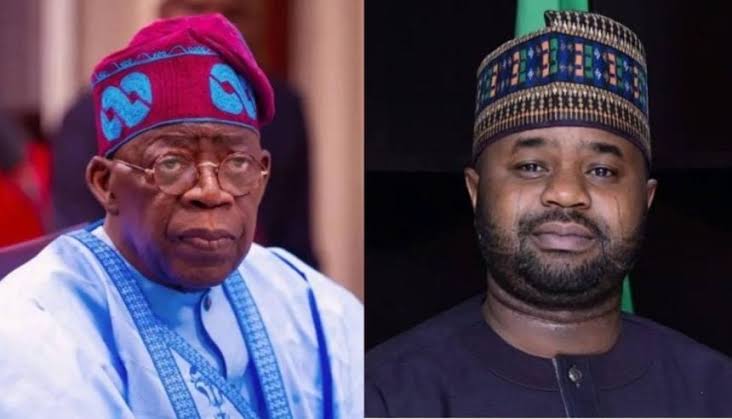
● Will Zacch Adedeji Turn the Screws on Aliko Dangote, Abdulsamad Rabiu, Mike Adenuga, Others?
There is a clinical, bloodless violence to the way power changes hands in the tropics. The process was well established in the ascent of President Bola Ahmed Tinubu.
Before he ascended to the stone fortresses of Aso Rock, Tinubu was a man weighed and found wanting by the gatekeepers of private capital. He was severally dismissed by corporate deities as an ambitious ghost whose time had dissolved.
Over crystal flutes of champagne, they mocked his audacity, locked their vaults against his emissaries, and poured rivers of capital into the rival temples of his political rivals.
It was a spectacular, fatal miscalculation. The outcast they buried in their boardrooms has resurrected as the supreme overlord responsible for their survival or otherwise. Today, the tin gods who once huffed and puffed with the hubris of self-made deities find themselves at risk of being throttled by methodical, institutional strangulation.
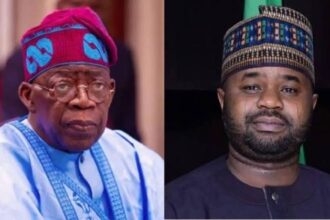
In a masterstroke of political chess, Tinubu has conscripted the cold, unblinking eyes of the tax collector into his re-election vanguard, turning Zacch Adedeji’s Nigeria Revenue Service, into a functional guillotine. With the terrifyingly brilliant appointment of tax maestro Adedeji to man the drawers of his re-election campaign chest – as Deputy Director of Fundraising – Tinubu has turned the objective machinery of the state into a flawless, inescapable net. Every hour the billionaires profit and every dollar they harvest, the state watches, logs, and calculates; leaving them to run helter-skelter in a humiliating genuflection.
The Capital’s findings reveal that recent, ongoing intrigues in the political circuit may force Nigeria’s foremost billionaires to repurchase their tomorrow from the very man they left in the lurch yesterday.
There are no sirens, no midnight arrests, no dramatic raids on the palaces of Ikoyi. Instead, there is only the menacing certainty of the book: a clinical, constitutional gaze that knows the financial worth of every billionaire as well as the depth of their tax exposures.
A billionaire’s life, before the tempest…
For thirty years, the relationship between the country’s billionaire cartel and the presidency was governed by a predictable, almost genteel rhythm of mutual leverage. Politicians held the coercive instruments of office, while oligarchs held the keys to the treasury. Together, they maintained an unspoken duopoly of power that rendered national election cycles mere exercises in elite consensus.
Historically, while the mass of the citizenry saw every election as a civic responsibility, the billionaire clique viewed it as nothing but a hedging exercise using their corporate empires to distribute political largesse across the aisle with the practised neutrality of Swiss bankers. This ensured that whoever emerged victorious at Aso Rock Villa would remain deeply indebted to their balance sheets.
Then came President Bola Ahmed Tinubu.
The presidential choke-hold…
In a series of calculated manoeuvres, the current administration has systematically dismantled the insulation mechanisms that previously protected Nigeria’s wealthiest elite from market realities and political accountability.
Today, the very corporate deities who once dismissed Tinubu’s national ambitions as a spent force are engaged in a breathless, undignified scramble to align with his political machinery. The huffing and puffing has ceased. The presidency, in an immaculate display of statecraft, has successfully outmanoeuvred Nigeria’s billionaire class, clipping their wings while securing a chokehold over their corporate empires.
And nowhere is this administrative leverage more apparent than in the machinations of the Presidency en route to the 2027 general elections campaign fund drive. Within the upper echelons of the country’s power circuits, investigations reveal that the presidency has constructed a fundraising apparatus that functions as a polite, unyielding regulatory trapdoor.
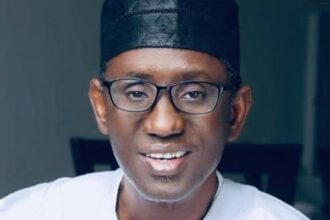
The masterstroke of this strategy lies in a single, unpublicised appointment that sent shock waves through the boardrooms of billionaire titans: the enlistment of Zacch Adedeji, the Executive Chairman of the Nigeria Revenue Service, as the deputy director of the campaign’s fundraising arm.
To the uninitiated, placing the nation’s chief tax collector inside a political campaign’s fundraising committee looks like a routine organisational brief. To the corporate boardroom, however, it represents an existential threat. By designation, Adedeji serves as the ultimate economic witness of the Nigerian state. He possesses the gritty blueprint of every billionaire’s financial anatomy.
Corporate intelligence sources confirm that Adedeji does not guess at net worth; his office tracks the exact tax exposures, corporate structures, and capital flights of every high-net-worth individual in the country. He knows how much they clear daily, hourly, and annually. He knows which shell companies feed which offshore trusts, which pioneer tax status exemptions are nearing expiration, and precisely how much paper profit has been shielded from the state’s coffers.
The logic behind the appointment is as logical as it is unsparing. There is no need for crude extra-legal threats or the theatrical, heavy-handed late-night raids that characterised the anti-corruption spectacles of previous regimes. The leverage remains entirely unspoken, hanging over the elite like a finely wrought guillotine.
If a prominent magnate chooses to close his wallet, or if he attempts to play the double game, acting the part of a cheerleader by day while secretly funneling resources to opposition networks, the corporate entity knows precisely what follows: a sudden, meticulous, and exhaustive audit of their accounts and tax liabilities.
The beauty of the strategy lies in its absolute adherence to legality. None of these tycoons can run to the international press or global human rights tribunals to allege an authoritarian witch-hunt or highhandedness. Every audit will be grounded in flawless constitutional provisions. Every penalty will be derived from existing regulatory procedures. The state will simply be doing its statutory duty.
Ebudola: From mockery to homage
To appreciate the profound shift in this dynamic, one must examine the anxious months leading up to the 2023 presidential election. The consensus within the country’s corporate aristocracy at the time was that Bola Tinubu’s candidacy was a spent ambition. In the private salons of Lagos and Abuja, billionaires openly mocked his physical endurance, scoffed at his campaign gaffes, and treated his lifelong political aspirations as an inconvenient regional joke. He was, in their estimation, the most underestimated candidate on the ballot, a man whose political capital had supposedly expired with the change of currency notes and sabotage from within his own party, the ruling All Progressives Congress (APC).
When Tinubu’s campaign emissaries approached certain prominent billionaires during that cycle, seeking customary financial commitments, the rejections were swift and condescending. Driven by a colossal hubris, these corporate titans believed their own mythology as the kingmakers of the republic. They convinced themselves that Tinubu’s political infrastructure was an archaic relic that would inevitably crumble under the wave of popular discontent and the calculated opposition of the incumbent establishment.
Instead of backing the candidate from Lagos, the vast majority of the billionaire class ─ including so-called old money and new money ─ threw their immense financial weight behind Tinubu’s rivals. The elite poured billions into the campaign these other candidates, convinced that they were purchasing front-row seats to the next dispensation while leaving Tinubu out in the political cold.
Today, that entire power dynamic has flipped as the men who once reviled and dismissed him now patronise his presidency with a desperation that borders on the pathetic. Presidential media team photographs regularly show these titans leaning in with wide, nervous grins, laughing a little too loudly at executive jokes, their body language radiating a profound vulnerability. They visit Aso Villa to pay homage, but more importantly, to secure corporate survival. They are looking for reassurances and praying that the man they so casually dismissed does not decide to balance the ledger of past slights.
A frantic, helter-skelter rush is now underway within high society to identify with President Tinubu’s second-term ambitions. Those who scorned him during his first trial now know better. They are engaged in a hyper-competitive race to be seen, acknowledged, and recorded as massive contributors to the presidential campaign fund.
The double-dealers’ dilemma
This scramble has split the billionaire divide into an ugly theatre of loyalists and turncoats. Even the most notorious double-dealers of the corporate world, who historically mastered the art of running with the hare and hunting with the hounds, have run out of room to maneuver.
In previous dispensations, these financial chameleons would hedge their bets by giving N100m (hundred million naira) to the incumbent and N50 million (fifty million naira) to the challenger under the table. Under the watchful, omniscient eye of the current administration’s intelligence apparatus, such duplicity has become a form of commercial suicide.
Corporate operators know that if they are caught secretly bankrolling opposition figures, the cost will extend beyond political exclusion; it would spell the systematic, regulatory dismantling of their corporate empires. They must support Tinubu publicly and generously, if they wish to survive the coming years.
Outside the golden cage
For the prominent billionaire whose names are synonymous with vast industrial empires and unimaginable personal luxury, the hour of reckoning has arrived. They must now prove whether they are truly the economic heavyweights they claim to be, or if they are merely frail creatures of state patronage. They must demonstrate their absolute, unquestioning loyalty to the Tinubu project, proving under the eagle glare of Adedeji’s tax ledger that they have the administration’s and Nigeria’s best interests at heart.
The supreme irony of their current predicament is that these very billionaires have recorded massive, jaw-dropping leaps in fortune since President Tinubu took over the reins of government. Despite the public groans regarding inflation and currency depreciation, the reforms enacted by this administration have treated the topmost tier of Nigerian capitalism with incredible benevolence.
Furthermore, these titans have been granted the holy grail of Nigerian commerce: preferential access to foreign exchange markets under the newly unified currency regime. They are finding that while the economic reforms have introduced short-term volatility for the masses, they have created a highly lucrative, predictable playground for mega-scale capital in the long run. They have grown richer, more consolidated, and more entrenched under Tinubu than they ever were under the unpredictable policies of the previous administration.
For these men to now attempt to shun Tinubu, or to secretly queue behind the shopworn promises of his rivals, would be nothing but corporate or financial suicide.
They are undoubtedly trapped in a golden cage of their own making. The economic reforms that have enriched them have also made them entirely dependent on the continuous, protective custody of the Tinubu presidency.
As billionaires turn cheerleaders…
How did Nigeria arrive at a point where the most powerful men in African commerce have no choice but to patronise the man in Aso Villa?
The answer lies in the latter’s profound understanding of the psychology of the Nigerian plutocrat. He knows that their wealth is fundamentally dependent on the continuous oxygen of state policy, central bank allocations, and regulatory kindness.
By floating the naira and eliminating the complex, multi-layered subsidy regimes, Tinubu radically reformed the economy and stripped the billionaires of their primary weapon of independence.
In the old era, they could use their massive, arbitrage-fueled liquidity to fund parallel centres of political power. They could threaten a government with artificial scarcity, bankroll parliamentary rebellions, or dictate the appointment of central bank governors.
Tinubu has dismantled these levers of corporate extortion. He has democratized market access where necessary, broken up long-standing distribution monopolies, and made it clear that the state will no longer tolerate the existence of corporate entities that fancy themselves larger than the country.
He has turned their own corporate ambitions into a leash. If a billionaire industrialist wishes to secure government concessions, they must sing from the presidential hymn sheet. His loyalty must be measurable and absolute.
Strip away the corporate communications veneer, the philanthropic foundations, and the tailored Brioni suits, and what remains is a class of men who are completely at the mercy of the the presidency.
Many of them huffed and puffed during the election cycle, acting like deities who could determine the fate of the country. Today, they are mere corporate courtiers, anxiously waiting in the anterooms of power, eager to hand over their billions to the campaign fund of the very man many of them had written off. For all their storied affluence, they could not even determine their own fate, after all.
Bola Ahmed Tinubu has played the ultimate game of political chess. He allowed himself to be underestimated, smiled through their derision of him, while noting every single door that got slammed in his face.
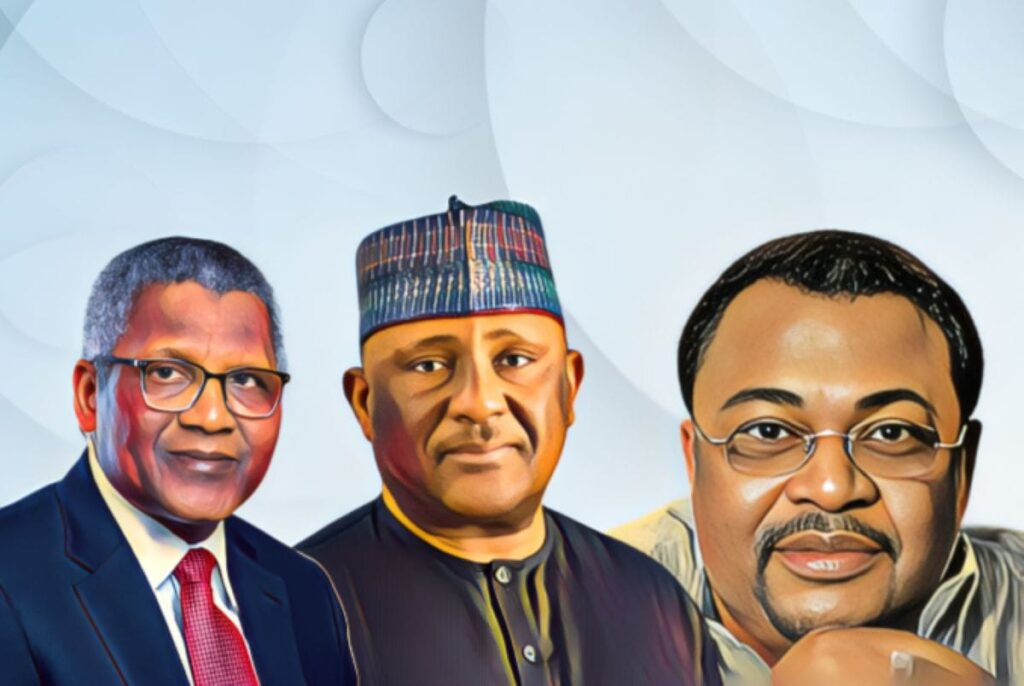
Now, with Zacch Adedeji holding the tax ledger and the full weight of the state regulatory apparatus aligned behind his second-term ambitions, the President has achieved the ultimate political masterstroke. But will his taxman, in fulfilling his brief, go after all or some of the country’s billionaires? Will he turn the screws on the triad widely regarded as the pride of Nigeria and the African continent: Forbes-rated Aliko Dangote, Abdulsamad Rabiu and Michael Adenuga?
To the rest who aren’t Forbes-rated, Tinubu certainly does not need to ask for the support. They will give it, in abject desperation, and in abundances that will break all historic records. Because they know that the alternative is an impeccable, perfectly legal, and entirely devastating descent into corporate oblivion.