●How alleged drug syndicate sought to move 184.5kg cocaine through DHL
● Investigators probe claims of insiders, previous shipments to UK, Asia and Europe
By Tayo Ogundele
For years, the great drug routes have been imagined through the familiar crime networks: hidden coves, seaports, border crossings, and clandestine airstrips.
However, the cocaine syndicates soon learned the convenience of ordinary things: A parcel handed to a courier; a consignment entered into a logistics system; a name typed onto a waybill; and a box moving through the same commercial machinery that carries documents, clothes and merchandise across continents.
It was along such an unremarkable route that investigators found a remarkable haul: 184.50 kilogrammes of cocaine, concealed in a shipment moving through DHL, one of the world’s largest courier companies.
The consignment, according to the NDLEA, was part of an international trafficking network whose tentacles stretched from South America through Nigeria to the United Kingdom, Europe and Asia, with an estimated street value of about N39 billion.
Ruined by complacency
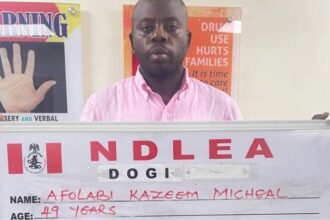
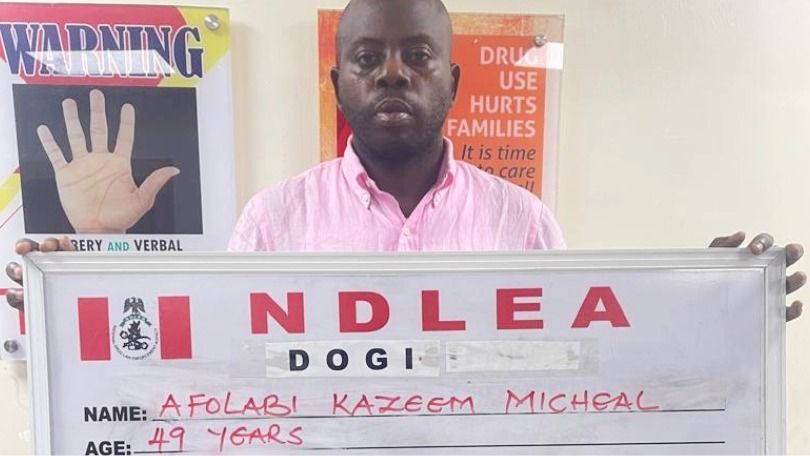
It took one mistake, just one silly mistake for DHL to ruin its corporate image. The international courier company, according to TheCapital findings, was the major trafficking hub through which Lagos Island big boy, Afolabi Kazeem Michael aka KC Luxury, trafficked hard drugs, until he met his waterloo, on August 13, 2026.
The National Drug Law Enforcement Agency (NDLEA) arrested Michael, whom the agency identified as the alleged Nigerian coordinator or “arrowhead” of an international cocaine trafficking cartel.
Like all criminal empires, KC Luxury’s operations crumbled to the smallest mistake: complacency. He got so comfortable in his criminal operations that he took things for granted.
One intercepted consignment weighing 184.50 kilogrammes has now pulled back the curtain on what the NDLEA described as one of the most sophisticated cocaine trafficking operations ever uncovered on Nigerian soil.
The backstory…
What began as a routine interdiction soon evolved into an international investigation stretching from South American cocaine suppliers through Lagos logistics channels to distribution cells across Britain, Europe and Asia. Along the way, investigators uncovered a startling allegation: trusted insiders allegedly embedded within DHL’s operational chain had become critical facilitators for a cartel that exploited the speed, credibility and global reach of one of the world’s biggest courier brands to move narcotics across continents.
Until he was arrested, luxury apartments, designer jewellery, social media glamour and business-class tickets formed KC Luxury’s polished façade. But hidden beneath that carefully curated image, NDLEA investigators alleged, operated a transnational cocaine syndicate whose success depended upon painstaking planning, false identities, financial couriers and, perhaps most disturbingly, the alleged collaboration of insiders within DHL.
Officials said the breakthrough came after officers intercepted 184.50 kilogrammes of cocaine concealed inside an export consignment, an unprecedented seizure for DHL operations in Nigeria. Rather than closing the case with a single drug haul, investigators followed every document, every payment trail and every human connection until the operation allegedly led them to the cartel’s Nigerian coordinator, Michael, alias “KC Luxury,” arrested moments before boarding a flight to Paris.
According to the agency, the investigation has redrawn the map of modern narcotics trafficking, revealing how criminal syndicates increasingly seek refuge inside the legitimate channels of global commerce while law enforcement races to expose every hidden link.
The cocaine seizure, according to NDLEA Chairman and Chief Executive Officer, Brig. Gen. Mohamed Buba Marwa (Rtd), is so far one of the agency’s most consequential narcotics operations in recent years.
Agency officials said the operation ultimately produced the largest cocaine seizure ever recorded from a single sting in the country.
But, rather than celebrating the seizure alone, NDLEA resolved to understand the brain behind it. Marwa immediately ordered the formation of a Special Investigation Team with a mandate extending far beyond recovering narcotics.
The NDLEA boss tasked the agency’s officers and field operatives with identifying every individual, intermediary company, financial pathway and operational link that transformed cocaine concealed inside export consignments into billions of naira in criminal proceeds.In fulfillment of the brief, the agency’s team approached the assignment by working backwards from the seized consignment. Every shipping document, payment record and communication linked to the parcel became part of an expanding intelligence map that steadily revealed the anatomy of a criminal enterprise stretching across several continents.
According to the agency, the intercepted consignment represented a shipment capable of generating about N39 billion once distributed through the cartel’s international network. The projected value underscored both the scale of the operation and the enormous financial incentive driving its activities.
The investigation soon extended beyond conventional law enforcement methods. Working closely with the management of DHL, the courier company through which the shipment had been processed, NDLEA investigators painstakingly reconstructed the movement of the consignment from the point of acceptance through every stage of its handling. That collaboration enabled investigators to identify intermediary companies, freight processors and individuals who allegedly played various roles in facilitating the shipment.
As the inquiry progressed, investigators concluded that the cocaine seizure formed part of a broader trafficking network rather than a stand-alone operation. Their findings, according to the agency, exposed an organised network built around compartmentalised responsibilities, carefully selected intermediaries and trusted insiders.
Those findings culminated in the arrest of two principal suspects alongside several other individuals believed to have participated in different aspects of the operation.
Among the key arrests was Lawal Mujab Kehinde, an employee of DHL, the logistics company that processed the intercepted shipment. According to NDLEA, investigators established that Kehinde maintained what they described as a direct and sustained operational relationship with the cartel’s Nigerian coordinator.
The agency alleged that his role went beyond routine logistics handling. He also packaged and processed consignments on behalf of the syndicate, ensuring their movement through the courier system before they were routed to destinations across the United Kingdom, Europe and parts of Asia. NDLEA further alleged that he received cash payments in return for facilitating those shipments.
The alleged insider connection represented one of the most significant breakthroughs in the investigation. According to the agency, it demonstrated how transnational trafficking organisations increasingly seek collaborators within legitimate commercial systems to reduce the likelihood of detection while exploiting established international logistics networks.
It was only a matter of time until investigators identified Michael aka KC Luxury as the Nigerian coordinator of the international cocaine syndicate.
Popular on social media under the name “KC Luxury,” Afolabi projected the image of a successful entrepreneur engaged in the trade of gold, jewellery and luxury products. His online presence reflected the lifestyle of an affluent businessman whose activities appeared firmly rooted in legitimate commerce.
NDLEA, however, alleges that the public persona concealed a far different enterprise.
According to the agency, Afolabi coordinated a sophisticated cocaine trafficking operation linking suppliers in South America with distribution channels operating through Nigeria and extending into the United Kingdom, Europe and Asia.
Investigators believe the carefully cultivated luxury image served as a protective cover that diverted attention from the alleged criminal enterprise operating beneath it.
The investigation entered its decisive phase after intelligence reports indicated that the alleged cartel coordinator intended to leave Nigeria.
Marwa disclosed that the agency received credible intelligence suggesting that Afolabi planned to travel aboard a business-class flight to Paris.
Acting on that information, NDLEA operatives mounted a coordinated surveillance operation at the Murtala Muhammed International Airport in Lagos.
“On the night of 13th August 2026, upon credible intelligence that he intended to flee the country on a business-class flight to Paris, our operatives moved decisively and apprehended him at the boarding gate of the Murtala Muhammed International Airport, Lagos,” Marwa said.
According to the NDLEA chairman, officers recovered €7,750, £2,800 and N100,000 in cash from the suspect at the time of his arrest. They also found expensive jewellery among his personal effects.
Subsequent searches took investigators to a luxury apartment on Banana Island, Ikoyi, where the agency said it recovered several exotic vehicles believed to be connected to the suspect.
Beyond the arrests and asset recoveries, investigators say the operation exposed the sophisticated methods employed by the syndicate to conceal its activities.
According to Marwa, the organisation routinely used false identities to disguise the true owners and consignors of shipments, making it significantly more difficult for authorities to identify those directing operations from behind the scenes.
The investigation also uncovered an extensive financial infrastructure allegedly supporting the network. NDLEA said financial facilitators moved billions of naira on behalf of the syndicate, providing an additional layer of insulation between the organisers and the proceeds of their alleged criminal activities.
Evidence gathered during the inquiry further established operational links outside Nigeria.
According to the agency, investigators identified criminal associates in the United Kingdom connected to the same trafficking network. Intelligence generated during the Nigerian investigation was shared with British authorities, leading to the arrest of additional suspects in coordinated enforcement actions.
The near-simultaneous operations carried out in Nigeria and the United Kingdom underscored the increasingly international character of modern narcotics investigations, where intelligence sharing and cross-border cooperation have become central to dismantling organised criminal enterprises.
Marwa described the operation as another milestone in NDLEA’s sustained offensive against transnational drug trafficking organisations.

The filth behind the glitter…
A casual glimpse into KC Luxury’s social media reveals the obscene opulence, raw wealth and flagrant flamboyance that defines his life. Scrolling through his Instagram page, for instance, offers the experience of a guided tour through a cosmos where money is displayed with the volume turned all the way up. The cars gleam like trophies, the jewellery catches the light with calculated ease, designer labels appear in a flurry, amid a panorama of photographs from some of the world’s most coveted destinations.
In his 40s, the dark-hued, slim-built businessman has cultivated a larger-than-life persona around Banana Island, widely regarded as the haven of the prosperous and preeminent in coastal Lagos. Inside the fabled enclave of mansions, multimillion-naira homes and residents widely acknowledged as the creme de la creme of Lagos high society, KC Luxury, until his arrest, moved with the confidence of a man accustomed to being noticed.
His social-media persona makes a virtue of abundance, igniting gossip and interest about his lifestyle even among fellow residents of the luxurious enclave. Not a few neighbours have swiftly done a double take at every encounter with him. Many whip out their phones and ipads for a quick glance into his digital gallery of wealth, indulgence and conspicuous consumption, the kind of spectacle that leaves little room for the ordinary.
For KC Luxury, there is always something to display.His automobiles alone have acquired something of a mythology among Lagos’ luxury-car cognoscenti, with an assortment of high-end machines that would constitute an enviable fleet even in a city accustomed to spectacular displays of wealth. Then come the watches and jewellery, the designer clothes, the private-looking settings and the photographs from far-flung playgrounds of the global rich. From Lagos to Paris and other fashionable destinations, his Instagram feed presents a life calibrated around movement, pleasure and the relentless pursuit of the spectacular.
And how he loves his liquor. For a man of his stature, champagne and cognac, apparently, are consumed with the easy extravagance of someone for whom the price of a bottle is an afterthought. At clubs in Lagos and on nights out abroad, stories surrounding his outings describe trays of expensive liquor arriving at his table, followed by the sort of largesse that has long been part of Lagos nightlife and La Vida Loca lifestyle. Of course, the ladies love him for his generosity and the men kowtow before him, for living their wildest fantasies.
Among those associated with his nightlife circle is Pretty Mike, the well-known Lagos socialite and club owner whose establishment was raided by the National Drug Law Enforcement Agency last year. Together, they have been depicted in the city’s nightlife circuit as men who understand the dynamics of excess: arrive in style, occupy the room, spend freely and leave behind a trail of stories.
His flamboyance has consequently invited comparisons with the late Nigerian socialite and businessman, Ezego, popularly remembered as the “King of Money”, whose legendary displays of cash became part of Nigerian popular culture. Like Ezego, KC Luxury has fashioned public spectacle out of private fortune, turning expenditure itself into a form of celebrity. There is no stopping him when he starts throwing money around like a drunken sailor.
For a man whose public image has been built around such extravagant displays, the question of where the money comes from inevitably shadows the spectacle. That question acquired a sharper edge following his reported identification by Nigerian law-enforcement authorities in connection with drug trafficking. The flamboyance that once appeared to some as the enviable excesses of a Lagos playboy now sits within a far more troubling narrative, giving the champagne, the cars and the globetrotting a different context altogether.
And that, perhaps, is the strange alchemy of the KC Luxury phenomenon: the same Instagram photographs that once advertised the good life now invite another reading. Behind the polished cars and champagne flutes lies a story in which wealth, celebrity, nightlife and alleged criminal enterprise have become entangled, leaving the public to stare at the glitter and wonder what, precisely, paid for it.