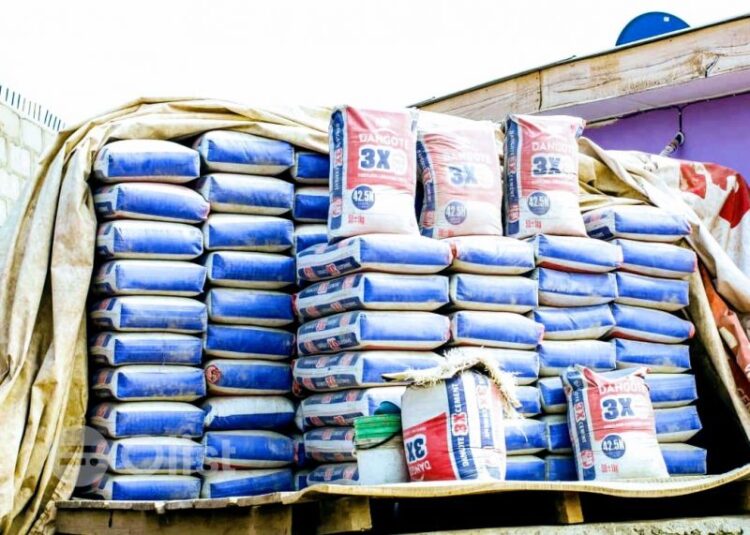
The price of cement is back in focus as dealers in parts of Nigeria release fresh rates, with a 50kg bag of Dangote Cement reportedly selling for more than N15,000 in some locations despite an ongoing investigation by the Federal Competition and Consumer Protection Commission (FCCPC).
The latest price movement has raised fresh concerns among developers, architects and quantity surveyors, who warned that prolonged volatility in the cement market could further worsen Nigeria’s housing crisis by increasing construction costs, property prices and rents.
The FCCPC is investigating developments in the cement industry amid concerns over possible price hikes and market practices.
Operators in the building sector are calling for the investigation to be concluded and its findings made public, particularly as consumers continue to face uncertainty over cement prices.
The Principal Partner of Space Button Architecture Limited, Amusan Oluseyi, said the sharp increase was difficult to justify given Nigeria’s substantial limestone deposits and cement production capacity.
According to him, Nigeria has an estimated cement production capacity of between 60 million and 65 million metric tonnes annually, compared with domestic consumption of about 25 million to 30 million metric tonnes.
Amusan said the government and regulators needed to act quickly to protect prospective homeowners, warning that rising cement prices were already affecting the wider housing market.
He also advocated greater investment in alternative building materials and construction technologies to reduce dependence on cement.
However, the Chairman of the Lagos Chamber of Commerce and Industry’s Engineering and Construction Group, Soji Adeniji, offered a different explanation for the latest price spike.
Adeniji said the increase was largely driven by temporary scarcity rather than an official price increase by manufacturers.
He linked the shortage to recent plant maintenance by Dangote Cement and access restrictions affecting some depots, expressing optimism that supplies would improve and prices would ease as more cement enters the market.
He also said he had not received an official notification from Dangote Cement announcing a new price.
The Public Relations Secretary of the Nigerian Institute of Quantity Surveyors, John Agbezin, said several factors were contributing to cement production and distribution costs.
He cited rising energy costs, foreign exchange pressures, diesel and gas expenses, logistics, insecurity, poor roads and multiple taxes.
Agbezin noted that trucks sometimes take longer routes to avoid insecure areas, adding significantly to transportation costs, according to a report by Punch.
He also pointed to strong demand from major infrastructure projects as another factor putting pressure on available supplies.
Beyond the immediate price increase, construction operators are demanding greater transparency across the cement supply chain. Agbezin urged the FCCPC to conclude its investigation and sanction any cartels or market abuses identified.
He also called for manufacturers and distributors to make factory and retail prices more transparent while encouraging the government to promote greater competition by supporting more cement producers.
For developers and prospective homeowners, the immediate concern remains whether the latest surge is temporary or signals another sustained increase in construction costs.
If cement prices remain unstable, industry operators warn that building a home could become even more expensive, deepening Nigeria’s housing affordability crisis.