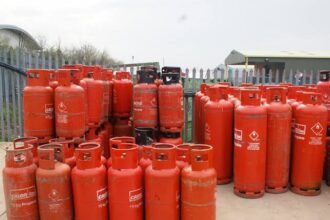
Cooking gas, also known as liquefied petroleum gas (LPG), is a popular and convenient source of energy for many Nigerian households. It is cleaner, faster, and more efficient than other traditional fuels such as firewood, charcoal, or kerosene.
However, the price of cooking gas in Nigeria is not fixed and varies depending on several factors such as demand, supply, location, and season.
In this article, we will provide you with the latest information on the price of refilling cooking gas per kg in Nigeria today, as well as answer some frequently asked questions about it.
How much is cooking gas per kg in Nigeria today?
According to our market research, the average price of cooking gas per kg in Nigeria today is ₦1,100. This means that if you want to refill a 12.5kg gas cylinder, you will need to pay ₦13,750 on average. However, this price is not uniform across the country and may differ from one filling station to another. Some factors that may affect the price of cooking gas in Nigeria include:
Demand and supply: The demand and supply of cooking gas in Nigeria fluctuate depending on the season, weather, availability, and accessibility of the product. For instance, during the rainy season, the demand for cooking gas may increase as people prefer to cook indoors, while the supply may decrease due to transportation challenges. This may lead to a rise in the price of cooking gas. Conversely, during the dry season, the demand for cooking gas may decrease as people opt for alternative fuels, while the supply may increase due to easier transportation. This may result in a drop in the price of cooking gas.
Location: The price of cooking gas in Nigeria may also vary depending on the location of the filling station. For example, cooking gas may be cheaper in urban areas where there are more filling stations and competition, than in rural areas where there are fewer filling stations and higher transportation costs. Similarly, cooking gas may be cheaper in regions where there are more gas plants and pipelines, than in regions where there are fewer gas plants and pipelines.
Quality: The quality of cooking gas in Nigeria may also affect its price. Some filling stations may sell adulterated or substandard cooking gas that may not last long or may pose safety risks. Therefore, it is advisable to buy cooking gas from reputable and certified filling stations that sell quality and genuine cooking gas.
The table below shows the current price of refilling cooking gas per kg in Nigeria today, as of 10th March 2024, based on our market research:
How long does cooking gas last in Nigeria?
The duration of cooking gas in Nigeria depends on several factors such as the size of the cylinder, the frequency of use, the type of stove, and the cooking habits. However, based on our research, we have estimated the average time in hours that a given kg of cooking gas is expected to last in Nigeria, as shown in the table below:
| Cylinder (kg) | Current Price |
|---|---|
| 1kg | ₦1,100 |
| 2kg | ₦2,200 |
| 3kg | ₦3,300 |
| 5kg | ₦5,500 |
| 6kg | ₦6,500 |
| 10kg | ₦11,000 |
| 12kg | ₦13,200 |
| 12.5kg | ₦13,750 |
| 50kg | ₦55,000 |
| Cylinder (kg) | Average Time (hours) |
|---|---|
| 1kg | 8 |
| 2kg | 16 |
| 3kg | 24 |
| 5kg | 40 |
| 6kg | 48 |
| 10kg | 80 |
| 12kg | 96 |
| 12.5kg | 100 |
| 50kg | 400 |
These estimates are based on the assumption that the cooking gas is used for an average of 2 hours per day, on a medium-sized stove, with moderate cooking habits. However, these estimates may vary depending on the actual usage and conditions of the cooking gas.
What are the benefits of using cooking gas in Nigeria?
Cooking gas in Nigeria has many benefits, both for the users and the environment. Some of the benefits of using cooking gas in Nigeria include: –
Cost-effectiveness: Cooking gas in Nigeria is cheaper than other fuels such as kerosene, firewood, or charcoal. According to the National Bureau of Statistics, the average price of kerosene in Nigeria was ₦361.29 per litre in July 2021, while the average price of firewood in Nigeria was ₦2,500 per bundle in December 2020. This means that cooking gas is more affordable and economical than these fuels, as it lasts longer and requires less quantity to cook.
Cleanliness: Cooking gas in Nigeria is cleaner than other fuels such as kerosene, firewood, or charcoal. Cooking gas does not produce smoke, soot, or ash, unlike these fuels, which emit harmful pollutants that can cause respiratory problems, eye irritation, and environmental degradation. Cooking gas also does not dirty the cooking pots, utensils, or kitchen, unlike these fuels, which leave stains and residues that are difficult to clean.
Convenience: Cooking gas in Nigeria is more convenient than other fuels such as kerosene, firewood, or charcoal. Cooking gas is easy to use, as it only requires a gas cylinder, a regulator, and a hose to connect to the stove. Cooking gas is also easy to control, as it allows the user to adjust the flame and temperature according to the cooking needs. Cooking gas is also easy to store, as it does not require a large space or special conditions to keep.
What are the challenges of using cooking gas in Nigeria?
Despite the benefits of using cooking gas in Nigeria, there are also some challenges that may hinder its adoption and usage. Some of the challenges of using cooking gas in Nigeria include:
Availability: Cooking gas in Nigeria is not readily available in all parts of the country, especially in rural and remote areas, where there are fewer filling stations, gas plants, and pipelines. This may limit the access and affordability of cooking gas for many Nigerians, who may have to travel long distances or pay higher prices to get cooking gas.
Safety: Cooking gas in Nigeria may pose some safety risks if not handled properly. Cooking gas is highly flammable and explosive, and may cause fire accidents or injuries if there are leaks, spills, or faulty connections. Therefore, it is important to follow the safety precautions and guidelines when using cooking gas, such as checking for leaks, using quality equipment, keeping away from open flames, and storing in a cool and ventilated place.
Awareness: Cooking gas in Nigeria may not be widely known or accepted by many Nigerians, who may have cultural, religious, or personal preferences for other fuels such as kerosene, firewood, or charcoal. Some Nigerians may also have misconceptions or fears about cooking gas, such as believing that it is dangerous, unhealthy, or expensive. Therefore, there is a need to create more awareness and education about the benefits and safety of cooking gas, and to encourage more Nigerians to switch to cooking gas.