
The 2024 presidential campaign’s home stretch kicks off with a mixed outlook across six key battlegrounds, according to new CNN polls conducted by SSRS in each state. Vice President Kamala Harris holds an advantage over former President Donald Trump among likely voters in Wisconsin and Michigan, while Trump has the edge in Arizona. The two split likely voters almost evenly in Georgia, Nevada and Pennsylvania, the state with the largest electoral vote prize that’s widely seen as up for grabs.
Across each of them, an average of 15% of likely voters say they have not yet firmly decided their choice, suggesting a sizable share of voters could shift their views on the race as attention to the campaign rises and campaign activity, especially in these states, hits a fever pitch in the final nine weeks before Election Day. …CONTINUE READING
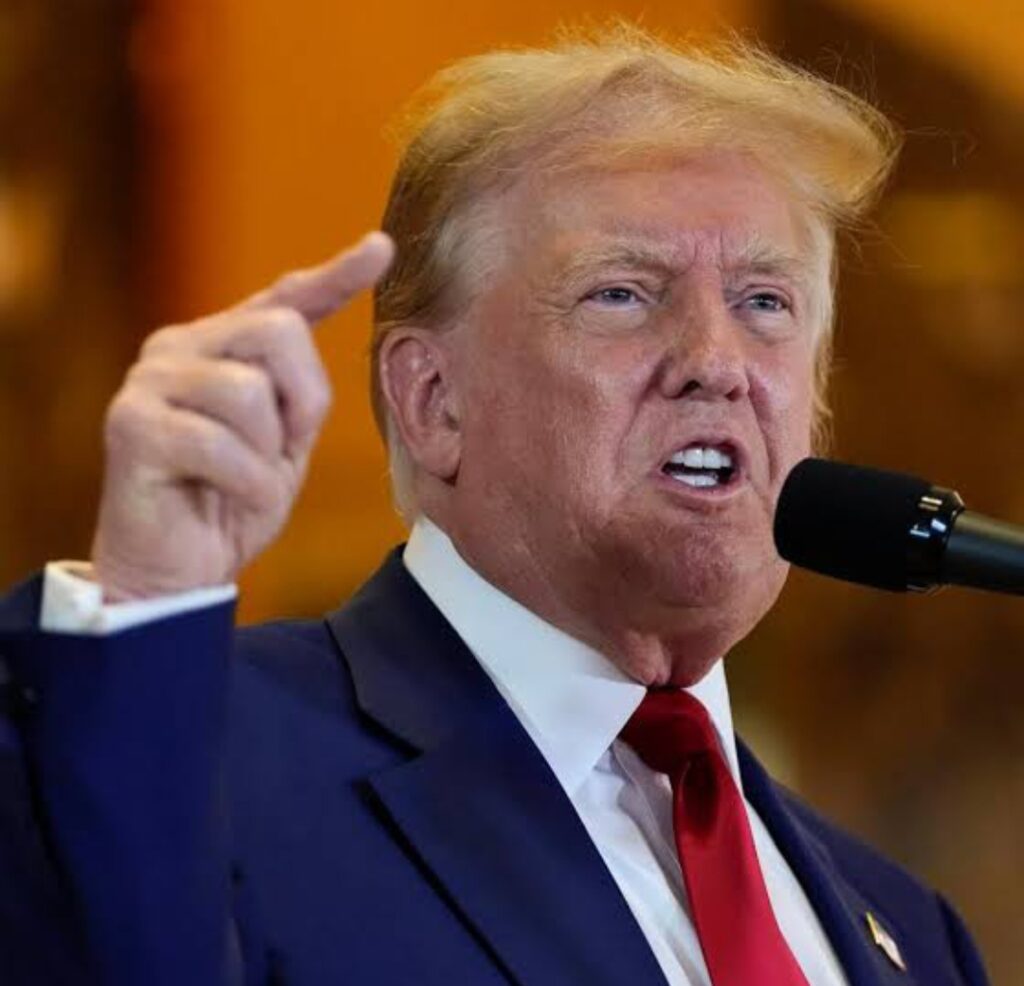

Likely voters in Wisconsin break 50% for Harris to 44% for Trump, and in Michigan, it’s 48% Harris to 43% Trump. In Arizona, Trump lands at 49% to Harris’ 44%. In Georgia and Nevada, 48% back Harris to 47% for Trump, and in Pennsylvania, the candidates are tied at 47%.
The polls, conducted after the Democratic National Convention in August, reflect results among likely voters determined through a combination of past vote behavior and current intention to vote.
The findings suggest an Electoral College landscape where Pennsylvania and Georgia are central to each candidate’s path to the White House. President Joe Biden carried all six of these states in 2020, winning Georgia by just under 12,000 votes and Arizona by a little over 10,000 votes. Were Harris to hold Biden’s 2020 wins outside of these six states and carry Wisconsin and Michigan, a win in Pennsylvania plus a single electoral vote from anywhere else would give her the presidency. Should Trump hold North Carolina – a state he carried in 2020 and that is widely considered a battleground in this year’s contest – wins in Georgia and Pennsylvania would put him over the top regardless of what happens in Wisconsin, Michigan or Nevada. In that scenario, even Arizona, where he currently holds a narrow lead, would not be necessary for Trump to win another term as president.
Harris’ emergence as the Democratic Party’s presidential nominee, replacing Biden atop the party’s ticket this summer, has altered some dynamics in the race but left others intact. Economic issues, which posed a notable weak point for Biden, remain the topic most often chosen by voters when asked what matters to their choice for president; an average of 39% of likely voters across states choose the economy as their top issue, with protecting democracy next at an average of 25%.
But Harris now trails Trump on trust to handle the economy by relatively smaller margins than Biden did; across the current polls, Trump is more trusted than Harris on the economy by 8 points on average. (In New York Times/Siena College polls of the same six states this spring, the same calculation yielded a 20-point Trump advantage over Biden.) Trump maintains a broad advantage as more trusted to handle immigration, while Harris has built on Biden’s lead as more trusted to handle abortion and reproductive rights, with women across these six states preferring her by an average of 27 percentage points on the issue.
Across nearly all of these states, likely voters are more apt to describe Trump than Harris as having clear policy plans to solve the country’s problems (voters split about evenly on this question in Wisconsin and Michigan), but voters in these swing states largely describe Harris’ views and policies as mainstream and Trump’s as too extreme. About half in each state (between 46% and 51%) say Trump’s views and policies are so extreme that they pose a threat to the country, while around 4 in 10 (between 37% and 42%) say the same about Harris’ positions.
Harris tops Trump across these states in being seen by voters as more apt to care about “people like you” – narrowly so in Arizona and Pennsylvania – and as someone they would be proud to have as president. Voters’ views on who would bring the kind of change the country needs vary state-to-state and are generally closely divided.
Independent voters, whose preferences in the presidential race vary widely state-to-state, are notably likely to say that they could change their minds about the race; roughly a quarter of independent likely voters or more feel that way across states. And they also are more likely than other respondents to say they think neither Harris nor Trump will unite the country rather than divide it (33% on average across states say so), that neither has clear policy plans to solve the country’s problems (31% on average) and that neither cares about people like them (26% on average).
As the sitting vice president, Harris is tied to an unpopular White House: Biden’s approval rating stands in negative territory with likely voters across all six states, with approval around 40% in all but Wisconsin, where it stands at 44%.
Still, Harris currently holds an average of 16% support among likely voters who disapprove of Biden’s job as president. The last time a sitting vice president ran for the White House, in 2000, Al Gore captured just 9% of those who disapproved of President Bill Clinton’s job performance nationwide, according to exit polls.


The electoral prizes: Georgia and Pennsylvania
Both Georgia and Pennsylvania remain thoroughly up for grabs, according to the polls, with tight margins overall and double-digit shares of likely voters – 12% in Georgia and 16% in Pennsylvania – saying they haven’t yet decided on a candidate, or that they might change their minds.
Black voters are a key bloc in both states, particularly in Georgia, and according to these polls, Harris stands at 85% among Black likely voters in Georgia and at 84% in Pennsylvania. In both states, though, Black registered voters express less motivation to vote in this year’s election than White voters do. In Georgia, 61% of Black registered voters say they are extremely motivated to vote compared with 70% among White voters, and in Pennsylvania, just 56% of Black voters say they are deeply motivated to vote compared with 72% of White voters.
Both states see significant gender gaps in presidential preference, with Harris ahead by double-digits among female likely voters in both states while Trump has similarly large leads among male likely voters. Harris widens her margin slightly in both states among suburban women, topping Trump by 16 points with that group in Georgia and 18 points in Pennsylvania.
Harris carries a majority of likely voters younger than 35 in both states, leading 59% to 36% in Pennsylvania, and 54% to 41% in Georgia.
White likely voters without college degrees in both states break broadly for Trump, particularly in Georgia, where roughly 7 in 10 support him. White likely voters who do have four-year college degrees, though, split in opposite directions across the two states. In Pennsylvania, they broadly favor Harris, 59% to 37%, while in Georgia, they are solidly in Trump’s camp, 65% to 32%. That dynamic is similar to the divide seen in 2020 exit polling.
Advantage Harris: Wisconsin and Michigan
Harris’ narrow leads in Wisconsin and Michigan are largely driven by consolidation of the Democratic base, as well as increased motivation among Democratic and Democratic-leaning likely voters, who are broadly aligned behind Harris now (96% in Michigan and 95% in Wisconsin support her).
CNN’s March 2024 poll in Michigan, fielded after Trump and Biden had secured enough delegates to win their parties’ nominations, found only 75% of Democratic and Democratic-leaning registered voters expressed support for Biden.
In both states, Harris’ support among some key demographics of the Democratic Party’s base resembles that of Biden’s 2020 win. Harris leads Trump among female likely voters (55% to 38% in Wisconsin, 54% to 38% in Michigan), White voters with college degrees (62% to 31% in Wisconsin, 52% to 41% in Michigan), and by 86% to 11% among Black likely voters in Michigan (the sample size for Black likely voters is not large enough to report in Wisconsin).
Younger voters here are less broadly in Harris’ camp than in Georgia, Pennsylvania or Nevada. In Michigan, voters younger than 35 split 43% for Harris and 42% for Trump. In Wisconsin, they break 49% Harris and 42% Trump. Both states were central to the uncommitted movement’s efforts to log protest votes against Biden during the Democratic presidential primary, an effort focused at least in part on younger voters.
The polls suggest enthusiasm among the Democratic base may be a factor in both states. In Michigan, 72% of Democratic-aligned registered voters say they are extremely motivated to vote, up from 58% in March, while the numbers among GOP-aligned voters remained effectively unchanged at about 7 in 10. And among registered voters in Wisconsin, 81% of Democratic-aligned voters and 70% of Republican-aligned voters say they are extremely motivated to vote.
Southwestern battlegrounds: Arizona and Nevada
Arizona, where Trump holds a narrow lead overall, stands out in these polls as the one state where Harris appears not to have restored support among several key Democratic groups, notably Latino voters, younger voters and White voters with college degrees. The contrast with Nevada demonstrates the difference.
In Nevada, Latino likely voters break broadly toward Harris, 57% to 37%, while they are more evenly divided in Arizona, 49% Harris to 43% Trump. White voters in both states break toward Trump by double-digit margins (56% to 39% in Arizona, 55% to 41% in Nevada). Harris carries White voters with college degrees in Nevada, 56% to 41%, while that group splits evenly, 47% each, in Arizona.
Younger voters in Arizona break narrowly in Trump’s favor: 48% of likely voters younger than 35 say they support Trump, compared with 42% behind Harris, a result within the margin of sampling error for that subset. In Nevada, though, likely voters in that age group divide 54% to Harris to 39% Trump.
And the gender gap in Arizona appears smaller than in other states, with women splitting 48% Harris to 45% Trump while men divide 55% Trump to 41% Harris. In Nevada, Harris holds a 16-point lead among female likely voters. (Among male likely voters in Nevada, Trump has an 18-point lead, 57% to 39%)
These results – a narrow Trump edge in Arizona and an even race in Nevada – come even as downballot races in the two states suggest a more favorable climate for Democrats. Arizona’s closely contested Senate race stands at 47% for Democrat Ruben Gallego with Republican Kari Lake at 44%, and a ballot measure designed to create a fundamental right to abortion in the state’s constitution holds overwhelming support – 62% say they’d vote in favor of it while 35% say they would oppose it. And in Nevada, incumbent Democratic Sen. Jacky Rosen stands at 50% support to Republican Sam Brown’s 40%.
The findings suggest Trump may hold broader appeal in these states than elsewhere in the battlegrounds. He racks up some of his largest advantages as more trusted on handling the economy (up 16 points over Harris in Nevada and 15 points in Arizona, compared with an average 5 point lead across the other four states), immigration (up 17 points in Arizona and 12 points in Nevada, up by an average of 9 points in other states) and crime and safety (up 10 points in Nevada and 9 in Arizona, up by an average of 3 points in other states) in these two states, and is narrowly more likely to be seen as having generally mainstream views and policies here than elsewhere (50% in Arizona and 47% in Nevada see him that way, compared with 45% or less in the other four states).
The independent candidates
The surveys show slim support for third-party and independent candidates, but in a close race, even small levels of support for such candidates can be meaningful. Voters were asked to choose among the candidates who were most likely to be included in each state’s ballot at the time the poll began based on candidate filings and existing rulings for who would be named on each ballot.
Independent Robert F. Kennedy Jr. was included in Michigan where there was no clear path for his name to be removed from the ballot even after he suspended his campaign, and received 4% support among likely voters, but he was not listed in the other states. The Wisconsin Elections Commission rejected a request from Kennedy to remove his name from the ballot while the poll was in the field.
Green Party candidate Jill Stein received 2% support in Arizona, but 1% or less elsewhere, and Libertarian Chase Oliver held 2% support in Wisconsin, but 1% or less in all other states. Independent Cornel West held 1% support in Georgia, but less than that in Wisconsin and was not included in the poll for other states.
Senate races
Results on Senate races across the five states that have them here show a more favorable climate for Democrats downballot in some key states, but suggest little ticket splitting in others, with the surveys finding some closer contests than other recent public polling. Democrats currently hold the Senate seats up for election this year in Michigan, Nevada, Pennsylvania and Wisconsin, and retiring independent incumbent Kyrsten Sinema of Arizona caucuses with the Democratic Party.
Democratic incumbents lead in Nevada (Rosen 50% to Brown 40%) and Wisconsin (Sen. Tammy Baldwin at 51% to Republican Eric Hovde’s 45%), and in the open Michigan Senate race, Democrat Elissa Slotkin tops Republican Mike Rogers 47% to 41% in the poll. But the survey finds closer races with no clear leader in Arizona (Gallego 47% to Lake 44%) and Pennsylvania (Sen. Bob Casey and Republican David McCormick each at 46%).
Interviews conducted August 23-29, 2024, online and by telephone with registered voters, including 682 voters in Arizona, 617 in Georgia, 708 in Michigan, 626 in Nevada, 789 in Pennsylvania, and 976 in Wisconsin. Likely voters include all registered voters in the poll weighted for their predicted likelihood of voting in this year’s election.